Blog · Arrington Appliance Repair Pro
Dryer Not Heating: The Vent Is Guilty More Often Than the Element
When a dryer tumbles but produces no heat, the heating element gets blamed first and the vent gets checked last, which is backwards. Restricted airflow overheats the cabinet, the t...
Mon–Fri 7AM–7PM · Sat 8AM–4PM · 24/7 Emergency
The Short Answer
When a dryer tumbles but produces no heat, the heating element gets blamed first and the vent gets checked last, which is backwards. Restricted airflow overheats the cabinet, the thermal fuse blows to protect your house, and the element dies innocent. Fix the airflow story and the parts story usually solves itself.
How a dryer protects itself, then stops heating
Dryers are simple safety systems: thermostats regulate temperature, a high-limit thermostat guards against overheating, and a one-time thermal fuse cuts heat entirely if temperatures run away. A clogged vent, a crushed flex hose behind the machine, or a lint-dammed roof exit all push temperatures toward that fuse. The fuse is doing its job; the vent caused the meeting.
Testing the parts, in order
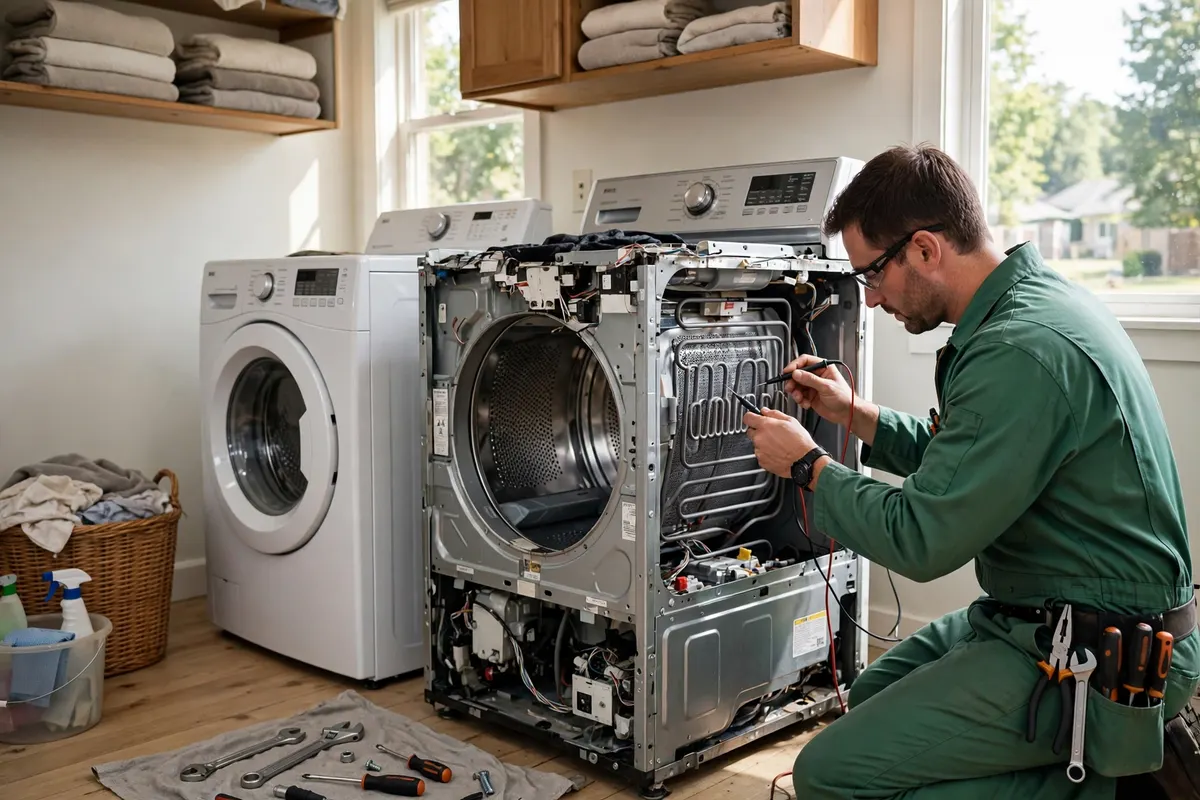
Element continuity comes first on electric dryers: a visible break or a dead meter reading settles it. Then the fuse and thermostats, the cycling thermostat that does the daily regulation, and on gas models the igniter and valve coils, which fail in a recognizable pattern (glow, click, no flame usually means coils).
Every one of those tests takes minutes. What separates a good no-heat repair from a repeat appointment is the airflow measurement at the outside hood afterward. Weak flow there means the new fuse has a date with the same fate, and we say so before we leave, not after the callback.
The Arrington vent problem
Laundry rooms in larger Williamson County homes often sit deep inside the floor plan, so vent runs stretch long with elbows, sometimes exiting through the roof. Length plus elbows plus pollen-season lint equals restriction, creeping so gradually that families adapt by running loads twice. If your dry times have doubled over a few years, suspect the vent before any part.
Our dryer repair visits include the vent check for this reason, and the maintenance page sets out a sensible cleaning rhythm for long runs.
The safety stakes are real
Lint is fuel, and a hot, restricted dryer is an ignition source looking for it. The U.S. Consumer Product Safety Commission publishes dryer fire guidance and recall notices at cpsc.gov; the short version is that vents are fire infrastructure, not housekeeping. A burning smell from a dryer means stop, unplug, and call, full stop.
Keep Reading
What Your Lint Screen Is Not Telling You
A clean lint screen is necessary and nowhere near sufficient. Fabric softener residue films the screen itself (scrub it with a brush and detergent if water beads on it), and the real restriction usually lives deeper: the transition hose crushed behind the dryer, the long run through the attic, the hood outside choked with a felt of lint and pollen. Airflow is a system measurement, taken at the exit, not a glance at the screen.
Make the outside hood your household gauge. Check it twice a year while the dryer runs on high heat. Strong, warm, steady flow means the system is honest. Weak or intermittent flow is your dryer asking for help in the only language it has left before the fuse speaks for it.
Questions & Answers
Timed versus sensor cycles use heat differently, and a weakening element or cycling thermostat can pass one and fail the other. It can also indicate a vent that only restricts under full lint load. Diagnosis sorts it quickly.
The fuse is inexpensive and accessible on many models, but replacing it without finding the airflow cause wastes the part and keeps the fire risk. If you do change it, clean the entire vent path the same day.
Long Arrington runs deserve yearly attention, twice yearly if dry times creep or the laundry volume is heavy. The outside hood should flap open strongly when the dryer runs.
No glow at all points to the igniter, fuse, or flame sensor circuit rather than the coils. All are testable in one visit and most are routine repairs.